
Turning an executive into a thought leader isn’t complicated, but almost everyone gets the basics wrong.
It mainly comes down to 3 moves:
- Pull out the expertise they already have
- Shape that expertise into a consistent point of view
- Publish it on a rhythm they can actually keep
The content ideas are never the problem — senior leaders are sitting on years of hard-won insights. The problem is getting it out of their head and onto the feed, consistently, despite their busy schedule. A good framework solves exactly that with a repeatable system. Do it, and an executive becomes a genuine authority — which drives trust, talent, and revenue for the whole company.
This is the playbook, whether you’re an executive doing it yourself, a comms leader running it for your leadership team, or an agency delivering it as a service.
What is thought leadership, really?
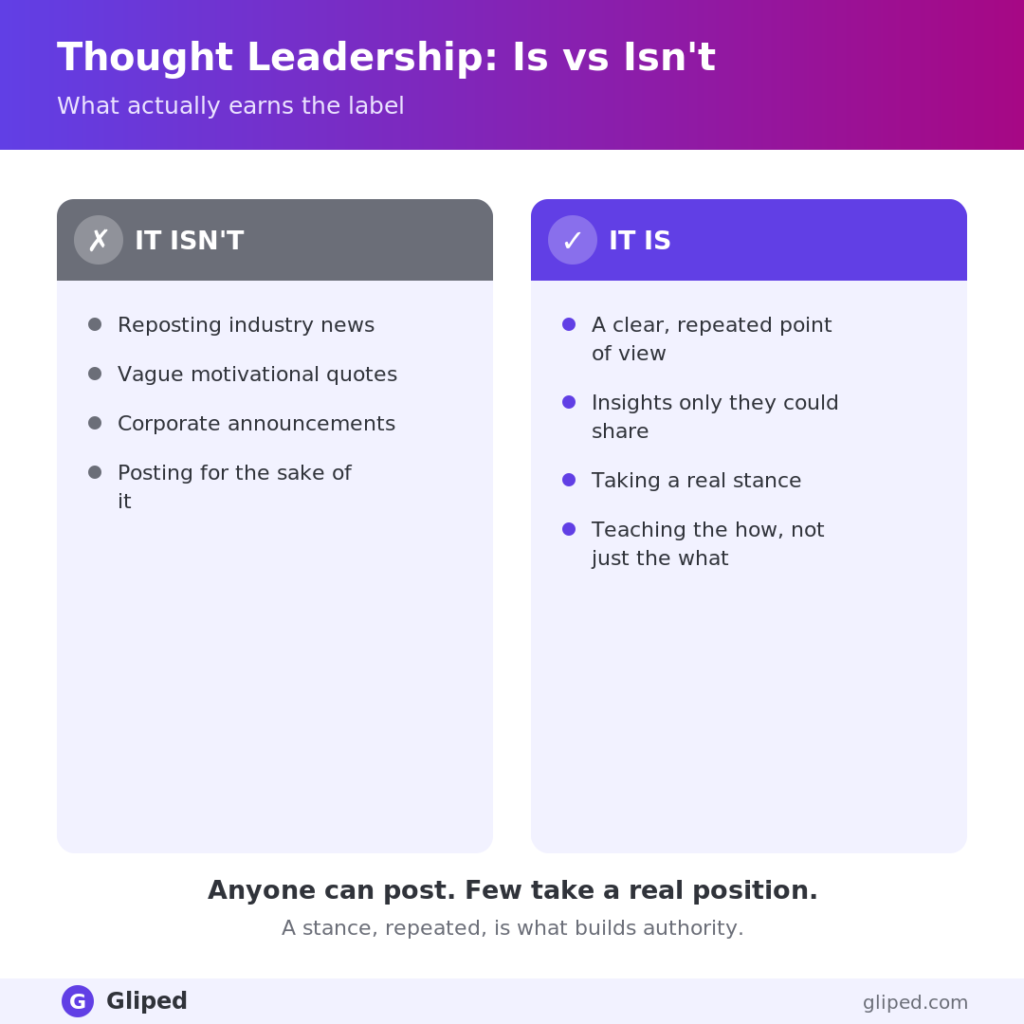
Let’s kill the buzzword first. Thought leadership does not mean motivational quotes or repurposed industry news with your logo pasted on it. A real thought leader has a distinct, informed point of view on their field and shares it often enough that people come to associate them with it. The bar is genuine insight — earned from experience — expressed clearly and consistently. That’s what earns the trust of buyers, talent, investors, and media. Anything less is just visibility and visibility without a point of view fades the moment you stop posting.
Step 1: Dig into the executive's expertise
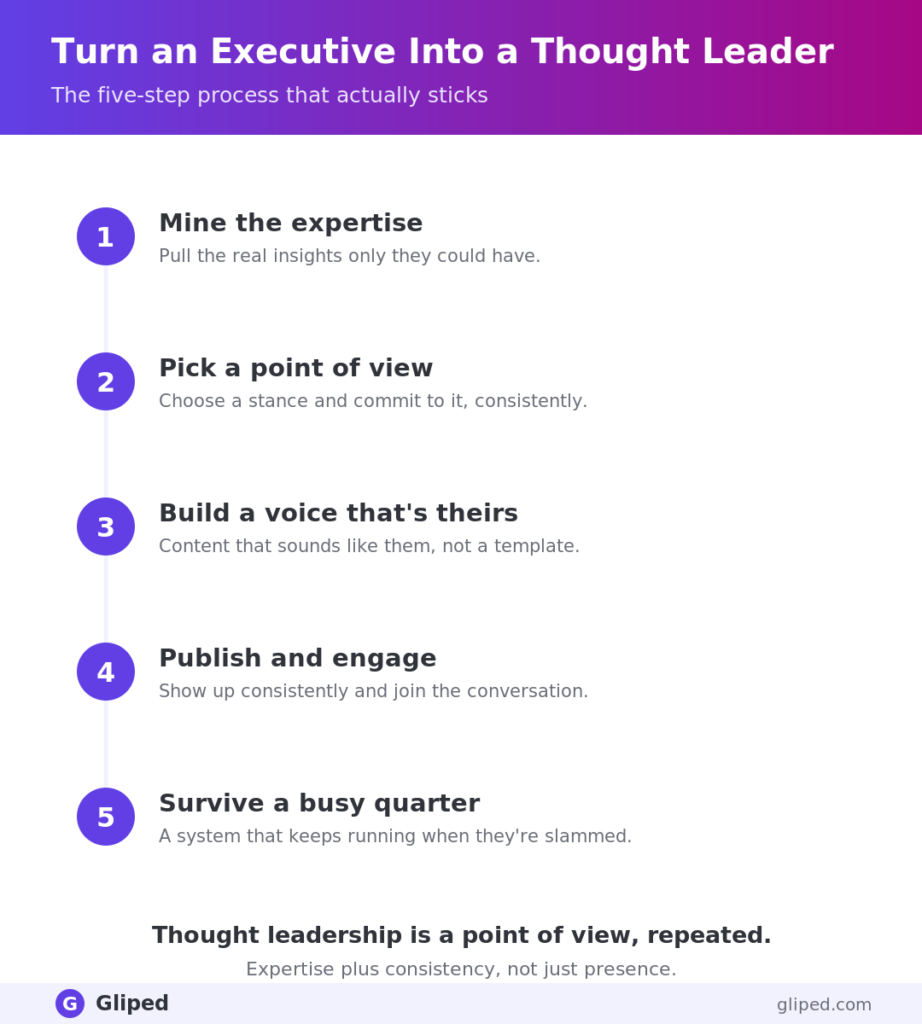
This is the hard part, and it’s not what people expect. The challenge isn’t that leaders have nothing to say — it’s that their most valuable insight is so obvious to them they don’t think it’s worth sharing. You solve it with structured extraction: short, regular interviews or voice notes, driven by good questions. Ask what they believe that others in their field don’t. What mistakes they see on repeat. What they’ve changed their mind about. What the last hard decision actually taught them. These conversations surface the ideas— the opinions, stories, and frameworks that become content. This interview habit is the engine of the entire framework. Skip it, and everything downstream sounds generic.
Step 2: Pick a point of view and stick to it
Scattered posting builds nothing. Decide what this executive should be known for — a few themes where their expertise and the market’s interest actually overlap — and anchor the content there. A CFO might own the messy intersection of finance and growth. A founder might own a contrarian take on how their industry should work. Consistency of theme is what makes someone memorable for something specific, instead of vaguely present. Return to those themes from new angles rather than chasing whatever’s trending this week.
Step 3: Build a voice that's actually theirs
Thought leadership only works if it sounds like the person. Whether they write it themselves or work with a ghostwriter, the voice has to be genuinely theirs — their language, their opinions, their stories. Audiences can smell corporate ghostwriting from a mile away, and the moment they do, it slowly but certainly undercuts the trust the whole effort was meant to build. If a writer is involved, the early weeks should go into calibrating the voice until content is indistinguishable from the executive’s own words. Authenticity here isn’t a nice-to-have, it’s the entire point. Add too many layers of approval and you strip out the conviction, the tone, and the authenticity. This is when what goes out no longer sounds like the person it’s supposed to represent.
Step 4: Publish consistently and engage
Authority comes from repetition. Two to three thoughtful posts a week, held for months, is what turns an unknown executive into a recognized voice. A burst of activity that fizzles in three weeks does nothing. And here’s the part most frameworks forget: thought leadership is a conversation, not a broadcast. The executive or their team should reply to comments and engage with peers, because that’s where relationships and reputation actually form. The leaders who engage, not just post, build authority way faster than the ones who treat LinkedIn like a billboard.
Step 5: Make it survive a busy quarter
Here’s why most executive thought leadership programs quietly die: they depend on a busy person finding time and inspiration, which never lasts past the first crunch. The fix is a system that removes both dependencies. Usually that means a small slice of the executive’s time – a weekly call or voice notes feeding a support structure (internal comms or an external partner) that handles drafting, scheduling, and engagement. This is precisely why so many companies use ghostwriters or agencies for their leadership teams. Not because the executives can’t write. Because a system delivers the consistency that willpower can’t.
What does thought leadership actually deliver?
Done well, it pays off across the entire business. It builds the trust that shortens sales cycles and generates inbound interest. It attracts talent who want to work for leaders they admire. It earns media, speaking, and partnership invitations. And it gives the company a human, credible face which matters, because people trust people, not logos. In 2026, with attention scarce and trust scarcer, the executives who consistently share genuine insight take a disproportionate share of both. Build the system, protect the consistency, and the authority compounds along with everything it brings with it. The alternative is staying invisible while someone with half your expertise, but twice your consistency, gets called the expert instead.
Where Gliped comes in
Turning a busy executive into a thought leader is exactly what we do.
Founded by Prabal Lakhotiya — a LinkedIn Top Voice for personal branding — we’ve used these same organic strategies to help 200+ founders, executives and 15+ brands grow on LinkedIn, with most seeing real traction within two to three months. No ads and no follower-buying — just sharp positioning, content in your own voice, and the consistency that compounds. Along the way, we’ve worked with executives from companies like Meta, Amazon Web Services, McDonald’s, Marubeni, Piramal Finance, Education First, BT Group and Urbanic — helping the person behind the brand, not just the logo.
If you’d like this handled for you, see how we work at gliped.com or reach out for a quick, no-pressure chat — we’ll tell you honestly whether we’re the right fit.