
A LinkedIn content strategy for B2B lead generation works when it moves people through a simple funnel:
- Attract the right audience with valuable content
- Build trust with proof and point of view
- Convert with clear offers and conversations.
It starts with sharp positioning and a few content pillars tied to your buyers’ problems, runs on a consistent posting schedule, and treats engagement and DMs as where deals actually begin.
Around 80% of B2B leads from social media come from LinkedIn — the platform works; most companies just post without a strategy.
This is that strategy, laid out step by step. It’s built for founders and B2B teams who want LinkedIn to generate pipeline, not just followers.
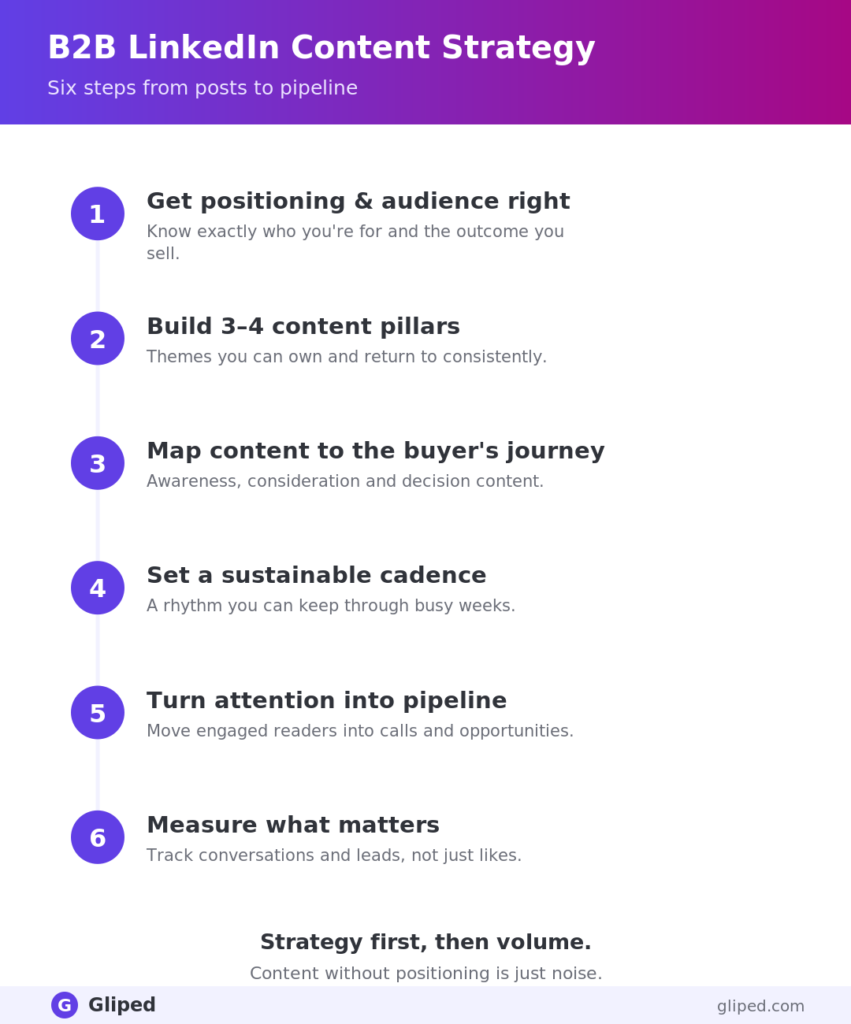
Step 1: Get your positioning and audience right
Strategy starts before any post. Be specific about what audience you’re posting for and what you help them achieve — trying to reach every buyer is how you reach none. Define your ideal customer, the problems they feel, and the transformation you offer, then decide what you want to be known for. Every piece of content should tie back to that positioning. This is the difference between content that builds a business and content that just fills a feed.
Step 2: Build three or four content pillars
Rather than inventing topics post by post, define a handful of themes you’ll consistently return to. Strong B2B pillars usually include: your expertise and how-tos (that demonstrate competence), your point of view on the industry (that builds authority), proof and results (that build trust), and the human/behind-the-scenes side (that builds connection). Pillars keep your content focused, make you memorable for something specific, and make planning far easier.
Step 3: Map content to the buyer's journey
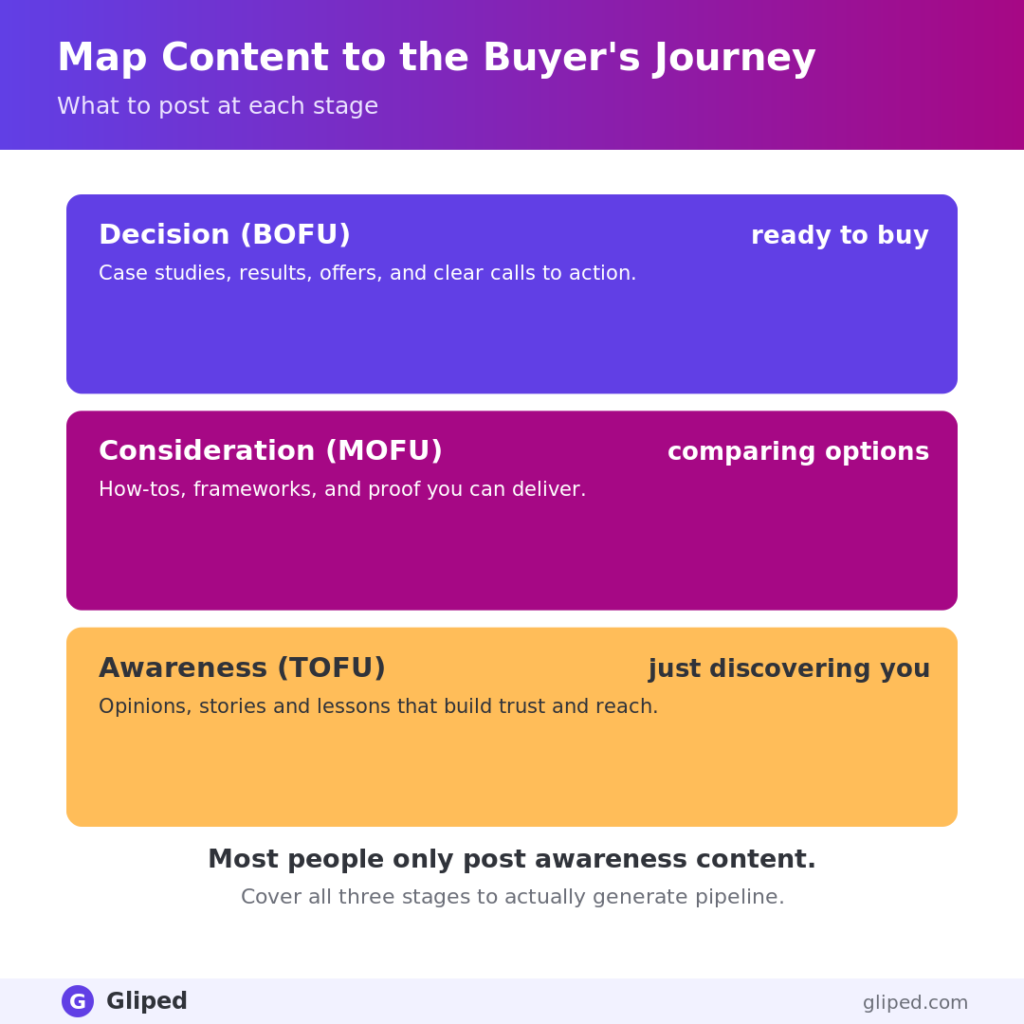
Not every post should sell. A working funnel needs content at three stages, and the mix matters.
- Top of funnel (attract): Broad, valuable, shareable content on the problems your buyers care about. This grows reach and pulls in the right audience.
- Middle of funnel (trust): Deeper expertise, frameworks, opinions, and proof that show you can solve the problem and can be trusted to.
- Bottom of funnel (convert): Case studies, results, clear offers, and calls to action for people ready to talk.
A rough balance of mostly value with occasional direct offers keeps you helpful rather than salesy while still giving ready buyers a path forward. People can’t act on an offer you never make — but constant selling kills the trust that makes offers work.
Step 4: Set a frequency you can sustain
Consistency is the whole game. Two to three quality posts a week, sustained for months, beats a burst of daily posting that falls apart in three weeks. Pair posting with daily engagement — thoughtful comments on your buyers’ and peers’ posts — because that’s often where the right people first notice you. Batch your writing if it helps, and lean on your content pillars so you’re never starting from scratch. The goal is a rhythm you can hold through busy weeks, because the results come from months of showing up.
Step 5: Turn attention into pipeline
This is the step most people skip, and it’s where leads are actually made. Reach and engagement are only the raw material; conversion happens in the follow-through. Make sure your profile is optimized to convert the visitors your content earns. Watch who engages — the right prospects liking and commenting are warm signals worth acting on. Move promising conversations to DMs, but lead with genuine help, not a pitch. And give people a clear, low-friction next step: a call, a resource, a way to start. A content strategy without a conversion path is a publishing habit, not a lead engine.
Step 6: Measure what matters
Track the metrics that connect to revenue, not just vanity numbers. Impressions and followers are leading indicators, but the ones that count are profile views from your target audience, quality conversations, inbound leads, which ultimately leads to a pipeline and closed deals attributed to LinkedIn. Review monthly, notice which pillars and posts drive real conversations, and double down on what works. B2B results compound slowly, so expect little in the first month, traction by months two and three and meaningful pipeline by months four to six. The teams that win are the ones that treat LinkedIn as a strategic channel and stay consistent long enough for the compounding to kick in.
Where Gliped comes in
If you want a B2B LinkedIn engine built and run end-to-end, that’s our wheelhouse.
Founded by Prabal Lakhotiya — a LinkedIn Top Voice for personal branding — we’ve used these same organic strategies to help 200+ founders and executives and 15+ brands grow on LinkedIn, with most seeing real traction within two to three months. No ads and no follower-buying — just sharp positioning, content in your own voice, and the consistency that compounds. Along the way, we’ve worked with executives from companies like Meta, Amazon Web Services, McDonald’s, Marubeni, Piramal Finance, Education First, BT Group and Urbanic — helping the person behind the brand, not just the logo.
If you’d like this handled for you, see how we work at gliped.com or reach out for a quick, no-pressure chat — we’ll tell you honestly whether we’re the right fit.