
Most people chase followers. Then they wonder why 8,000 connections produce zero conversations. Followers don’t matter. Engagement does — because engagement is the signal that says real people care about what you say, and it’s the thing every algorithm now rewards over raw reach.
This is an updated version of an older Gliped blog, updated for how social platforms — LinkedIn especially — actually work in 2026. No recycled tips. Ten strategies you can use this week, in the order of impact, with the reasoning behind each so you can adapt them to your own audience.
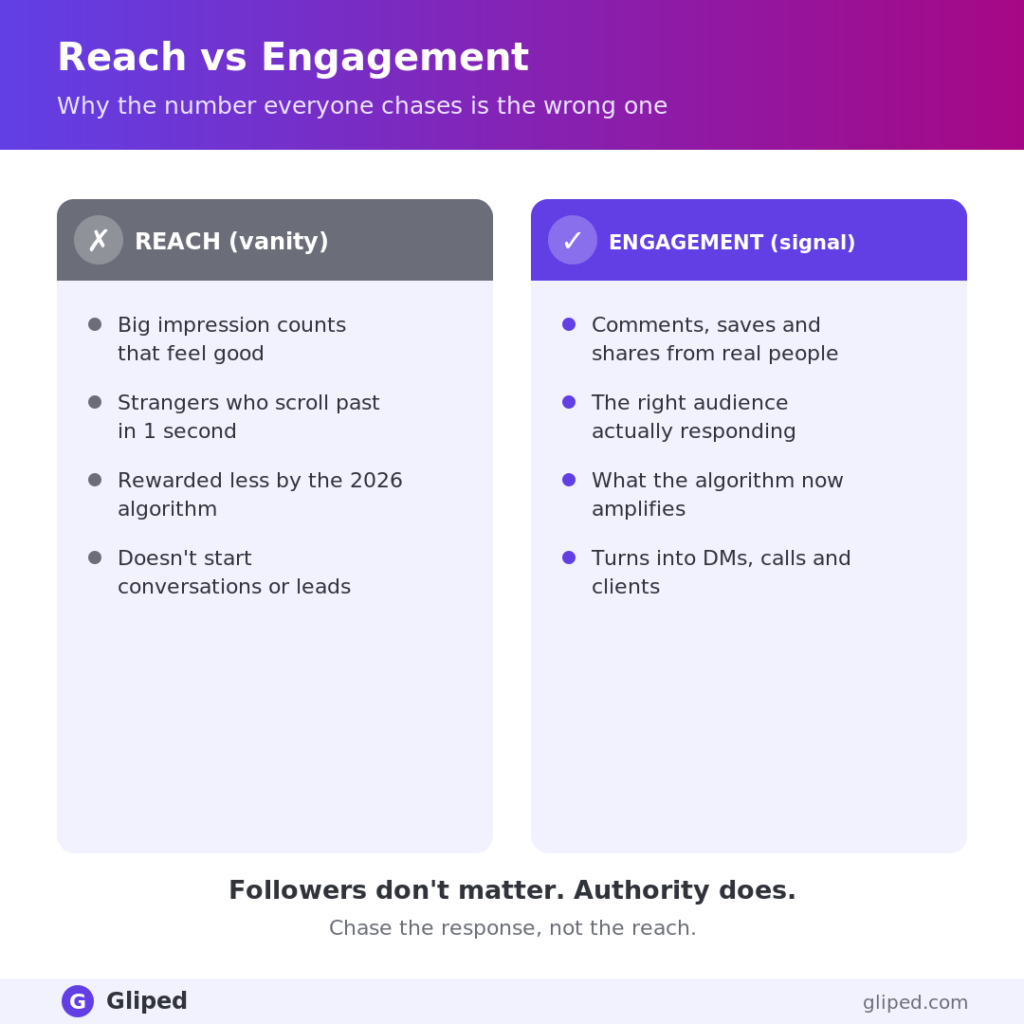
Why engagement beats reach in 2026
The bar moved, and most people didn’t notice. A few years ago you could buy attention with volume — post more, reach more. Now the platforms optimise for meaningful interaction: comments over likes, saves over scrolls, replies over impressions. A post that 200 of the right people discuss will out-earn a post that 20,000 strangers glance past.
So the real question is not “how do I get seen?” It’s “how do I get the right people to respond?” Every strategy below answers that.
1. Get specific about who you're actually talking to
“Everyone” is not an audience. If your content could speak to a 22-year-old job seeker and a 50-year-old CFO equally, it speaks to neither. Pick the one person you most want in your DMs — their role, their pressure, the thing keeping them up at night — and write every post as if you’re talking to them across a table.
- Name the role, the industry, and the specific problem you solve for them.
- Write to one person, not a crowd — it reads warmer and pulls stronger responses.
- When your ideal reader recognises themselves in the first line, they stop scrolling.
2. Fix the profile before you optimise the posts
Every strong post sends people to your profile. If the profile is weak, engagement leaks. A sharp headline and a first line of your About section that states the outcome you create will convert curious visitors into followers and inbound leads. This is the highest-leverage 30 minutes you’ll spend this month.
3. Lead with the hook, not the throat-clearing
The first two lines decide everything, they’re all anyone sees before “…see more.” Open with a bold claim, a surprising number, or a contrarian statement. Cut the “In today’s world…” warm-up entirely. If the hook doesn’t earn the click, nothing after it matters.
- Bold claim: “Your best content is being ignored because of line one.”
- Specific number: “27,057 impressions from a post I almost didn’t publish.”
- Contrarian: “Posting daily is hurting most founders, not helping them.”
4. Trade stock visuals for something real
Generic stock graphics get scrolled past because the brain has learned they carry no information. A screenshot of a real DM, a photo from an actual event, a simple hand-drawn diagram, or your own face on camera all out-perform polished clip-art. Real beats pretty.
5. Comment like it's part of the job; because it is
The fastest way to grow engagement on your posts is to be genuinely engaged on other people’s post. Fifteen thoughtful comments a day on the feeds your ideal clients read will do more than another scheduled post. Not “great share 🙌” — an actual opinion that adds something. People check who wrote it, and the good ones come to find you.
6. Post consistently enough to build a rhythm
Consistency compounds; sporadic brilliance doesn’t. Three to four strong posts a week, every week, beats a viral burst followed by a month of silence — because silence gets filled with doubt, and the algorithm forgets you. Build a small runway of ideas so you’re never posting from panic.
7. Ask for the response you want
Engagement rises when you make it easy and specific. End with one clear question, not five. “What would you add?” beats “Let me know your thoughts.” And when people reply, reply back within the first hour — early conversation tells the platform this post is worth showing to more people.
8. Read the data, then do more of what worked
You don’t need a dashboard obsession. Once a week, look at your three best and three worst posts and ask what the winners had in common — format, topic, hook style, time of day. Double down on the pattern. Most people create endlessly and analyse never; flip that ratio slightly and results climb.
9. Borrow trust before you've built your own
Collaboration is a shortcut to relevance. A shared post with a respected peer, a thoughtful reply to a well-known founder, or an interview on someone else’s page puts you in front of an audience that already trusts the host. You’re not begging for reach — you’re adding value to their community, and their audience notices.
10. Give your best stuff away
The instinct to hold back your good frameworks for paying clients is backwards. Give away the what and the why generously; people pay for the who and the how — for you to do it with them. Your most useful, specific, “I can’t believe this is free” posts are the ones that get saved, shared, and remembered.
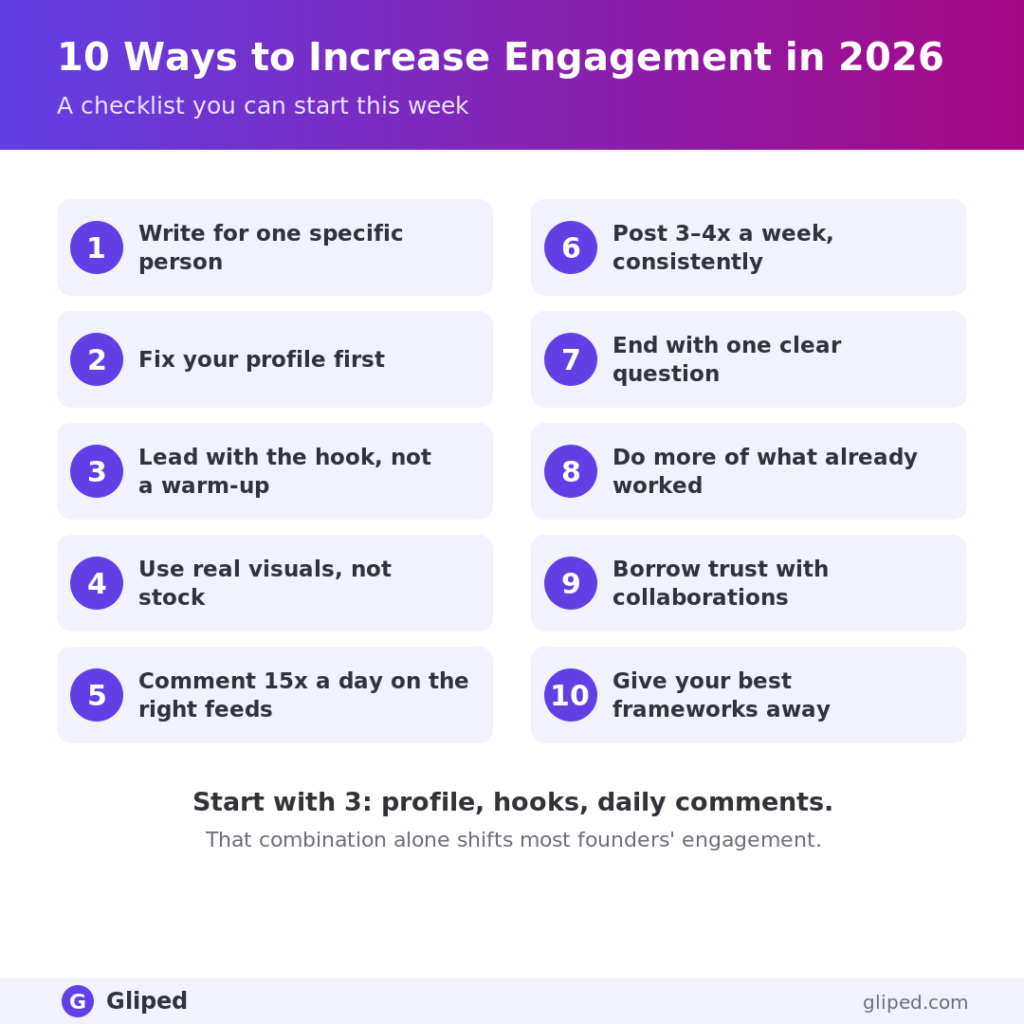
Where to start this week
Don’t try all ten at once. Fix your profile, sharpen your hooks, and commit to fifteen real comments a day for two weeks. That combination alone shifts most founders’ engagement noticeably — and it costs you nothing but attention.
Engagement isn’t a trick. It’s what happens when the right person feels like you’re talking directly to them. So, are you writing for everyone, or for the one person you actually want to work with? You already know which one works.
Where Gliped comes in
Knowing these strategies is one thing; running them every week is another.
That’s what we do at Gliped. Founded by Prabal Lakhotiya — a LinkedIn Top Voice for personal branding — we’ve used these same organic strategies to help 200+ founders and executives and 15+ brands grow on LinkedIn, with most seeing real traction within two to three months. No ads and no follower-buying — just sharp positioning, content in your own voice, and the consistency that compounds. Along the way, we’ve worked with executives from companies like Meta, Amazon Web Services, McDonald’s, Marubeni, Piramal Finance, Education First, BT Group and Urbanic — helping the person behind the brand, not just the logo.
If you’d like this handled for you, see how we work at gliped.com or reach out for a quick, no-pressure chat — we’ll tell you honestly whether we’re the right fit.