
In 2026, the LinkedIn algorithm rewards exactly one thing: content that holds attention and starts real conversations.
It hands your post out in phases — first to a small slice of your network, then wider only if that first slice actually engages. Also, it now weighs how long people read (dwell time) and how much they comment, posts that spark conversation will be rewarded.
Knowing what to avoid is just as critical as knowing what to post. The algorithm actively suppresses engagement bait and link-stuffed content, killing their visibility. By cutting out these bad habits, your content earns its reach through pure value rather than counterproductive tactics.
This is the complete breakdown of how the algorithm works in 2026 and what you can do about it. Everything else you do on LinkedIn sits on top of this — so it’s worth understanding properly, instead of chasing hacks that stop working the very next month.
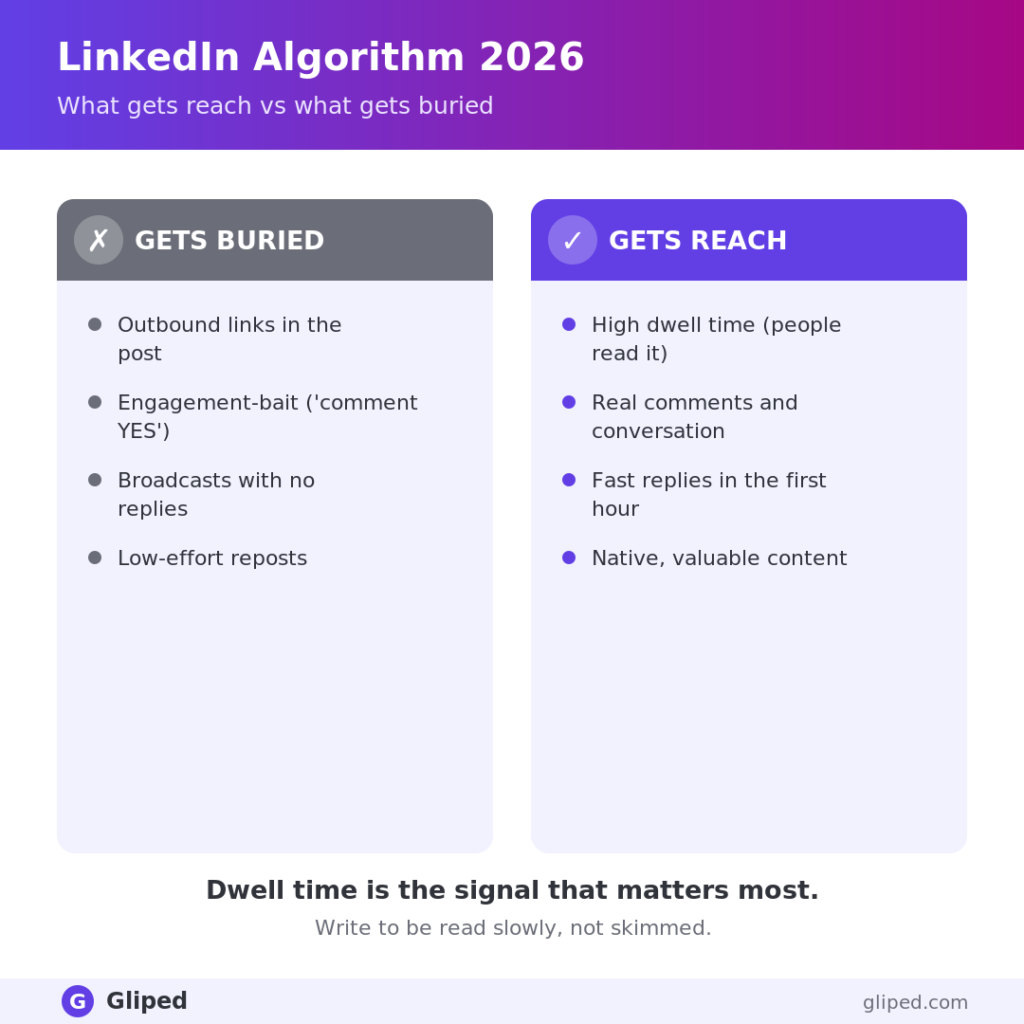
How does the LinkedIn algorithm work in 2026?
Every post goes through three stages, and once you understand this journey, almost everything about reach makes sense.
- Quality filter: The second you publish, LinkedIn sorts your post into spam, low quality, or clear. Only clear posts move on — and they go to a small initial sample of your connections.
- Engagement scoring: For the crucial first 30 to 60 minutes, LinkedIn monitors how your initial audience reacts. It’s actively measuring signals like comments, shares, reactions, and dwell time.
- Expansion: Strong early signals push the post past your network to 2nd- and 3rd-degree connections and people interested in the topic. If your post gives out weak signals? Distribution just stops.
The takeaway is simple: the first hour decides everything. A post that earns thoughtful early engagement gets amplified. One that doesn’t, dies quietly — no matter how good it actually was.
Dwell time: the signal that matters most
The biggest shift in recent years is dwell time — how long people actually spend reading your post. LinkedIn treats it as its best guess at quality, and the gap is not subtle: posts that hold attention for a minute or more can pull many times the engagement of posts people scroll past in two seconds. This is why a sharp hook and genuinely readable content matter so much. You’re not competing for a click. You’re competing for seconds of attention — and those seconds are exactly what the algorithm is counting.
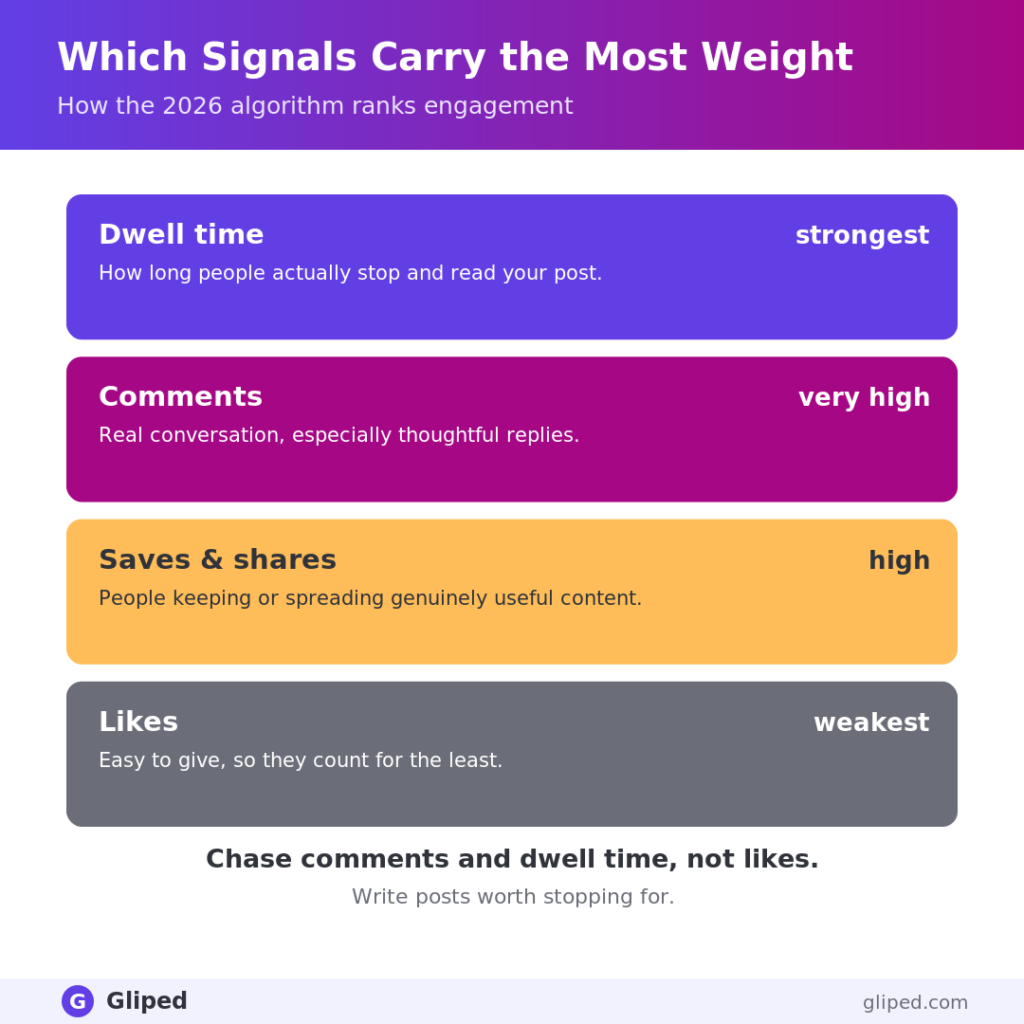
Comments now beat likes by a mile
Not all engagement is equal, and this is where most people get it wrong. A like takes a thumb. A comment takes effort — and it starts a conversation. So the algorithm weighs comments dramatically more heavily. Shares and saves rank high too. That should change how you write: stop fishing for likes, and start writing posts that give people something to actually respond to — a question, a take worth arguing with, a story that pulls out their own. Once the comments roll in, don’t leave them hanging, drop genuine replies. That back-and-forth extends the exact conversation the algorithm is rewarding.
What gets buried in 2026?
What’s punished matters as much as what’s rewarded. A few things reliably cap your reach — and most people are doing at least one of them.
- External links in the post body: sending people off LinkedIn can cost you around 60% of your reach. Put the link in the first comment, or add it after the post is live.
- Engagement bait: “Comment YES if you agree!” is detected and demoted now. The algorithm wants real conversation, not a manufactured one.
- Low-dwell content: generic, skimmable posts nobody stops for signal low quality and never get expanded.
- Broad, generic topics: content aimed at everyone engages no one. Specificity is what holds attention.
What formats actually work right now?
Format matters because it drives attention. Video is favored heavily — LinkedIn video pulls several times the engagement of text, and live video far more still. Document carousels and images earn extra dwell time because people swipe and linger. And plain text still works beautifully when the writing is tight and the hook lands. The rule isn’t “always use format X.” It’s “use the format that best holds attention for this specific idea.”
How to work with the algorithm, not against it
You don’t need tricks. You need to hand the algorithm the signals it’s already looking for. Open with a hook strong enough to stop the scroll and win those first seconds of dwell time. Write about specific things that pull a genuine reaction, and end with something that invites a comment instead of a like. Post when your audience is actually online, so that make-or-break first hour has real people in it — then be there to reply. Keep links out of the body. And above all, be consistent because the algorithm favors accounts that reliably produce content people engage with.
None of this replaces having something worth saying. The algorithm rewards attention and conversation but attention and conversation come from a real point of view, told well. Master the mechanics here, pair it with an actual opinion and your reach will take care of itself. For the tactical next step, see our guides on getting more impressions and finding post ideas. Attention isn’t crowded. It’s unevenly distributed — and it flows to the people who keep showing up.
Where Gliped comes in
Working with the algorithm consistently is a full-time commitment — one we can offer you at Gliped.
Founded by Prabal Lakhotiya — a LinkedIn Top Voice for personal branding — we’ve used these same organic strategies to help 200+ founders and executives and 15+ brands grow on LinkedIn, with most seeing real traction within two to three months. No ads and no follower-buying — just sharp positioning, content in your own voice, and the consistency that compounds. Along the way, we’ve worked with executives from companies like Meta, Amazon Web Services, McDonald’s, Marubeni, Piramal Finance, Education First, BT Group and Urbanic — helping the person behind the brand, not just the logo.
If you’d like this handled for you, see how we work at gliped.com or reach out for a quick, no-pressure chat — we’ll tell you honestly whether we’re the right fit.